


The entire month of March is dedicated to poison prevention, and we want to help all veterinarian practices bring awareness to their clients about pet poisoning. Creating awareness can help prevent a serious illness or tragic event among your patients. Take part in educating your clients on poison prevention and help them keep their pets safe!
4 Educational Tips for Pet Poison Prevention
Talk to your clients about the dangers of common household poisons for pets.
There are many foods or other household items that are regularly used by pet owners that can be very harmful to their pets. From winter weather precautions and spring cleaning prep to daily foods and household plants, remind pet owners of these dangers:
- Over the counter and prescription medications
- Grapes
- Raisins
- Chocolate
- Macadamia nuts
- Garlic
- Caffeinated drinks
- Onions
- Xylitol
- Insecticides/bug sprays
- Rodenticides
- Cleaning products (bleach, window cleaners, bathroom cleaners, etc.)
- Heavy metals such as lead and zinc
- Fertilizer
- Detergents
- Antifreeze (did you know it smells sweet to your dog!)
- De-icers
- Pennies/Coins
- Plants (indoor and outdoor) such as aloe vera, ivy, jade, peace lily, elephant ear, azaleas, tulips, and more
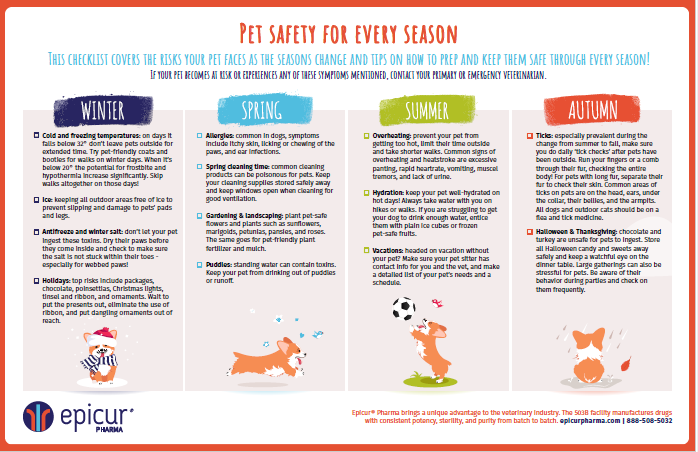
Help your patients stay safe in every season!
Share our print-friendly Seasonal Tip Sheet with pet owners to keep them prepared for every season. You can also download the version for your practice that will keep you and your staff prepared!
Educate your clients on the signs of poisoning.
Pets who experience poisoning act abnormally and show some key indicators that they’ve ingested an item they shouldn’t have. Provide your clients with a list of telltale signs and symptoms, such as:
- Drooling
- Vomiting
- Loss of appetite
- Diarrhea
- Lethargy, weakness
- Pale or yellowish gums
- Coughing of blood
- Excessive thirst or urination
Make poison prevention a priority all year for your clients.
Provide pet owners with a take-home list of reminders or send it out by email regularly to make sure pet owners are aware! Even though March is poison prevention month, these reminders should stay top of mind all year long. Make handouts available during each patient visit. Feel free to use our free patient handout digitally or as a printable!
Provide your clients with instructions on what to do in the event of pet poisoning.
If your practice does not offer emergency services, ensure your clients know how to contact the nearest 24/7 animal hospital. You can also make resources such as the Pet Poison Helpline and the ASPCA Animal Poison Control Center (APCC) readily available at your practice, on your website, and in your client communications.
Like you, Epicur wants your patients to stay safe and healthy. Together, we can help prevent pet poisoning by educating pet parents!
Download the printable pet poison awareness handout for your practice and your clients!
Want more tips on pet poisons and how to safely store household items? Our Industry Partner, AAHA.org has some great resources! Check them out here.