

What Should Veterinarians Know About Ophthalmic Eye Drops?
Quality matters in every veterinary medication, but when it comes to ophthalmic medications, the stakes are even higher. Eyesight plays a critical role in an animal’s quality of life, and veterinary professionals know that even the slightest variation in ophthalmic preparations can impact healing, comfort, and outcomes.
When veterinary ophthalmic medications fail to meet basic standards of quality and consistency, the consequences can extend far beyond the patient. They can influence treatment outcomes, client trust, and confidence in your medication provider.
Dr. DJ Haeussler (BS, MS, DVM, DACVO) has seen firsthand how low-quality eye drops can negatively impact patient outcomes and the veterinarian-client relationship. From delayed healing to frustrated pet owners, the ripple effects of unreliable medications are real—and preventable.
He helps us break down the common problems with compounded veterinary ophthalmology products today and what to look for in your products and medication partner.
Only have 3 minutes?
Watch the highlights from our interview with Dr. Haeussler.
What problems are veterinarians seeing with eye drops?
Veterinary ophthalmology often relies on compounded medications to meet specific clinical needs. However, not all compounded products are created equal.
Many veterinary professionals have experienced challenges with compounded ophthalmic medications, including:
- Changing formulations without clear communication
- Inconsistent beyond-use dating
- Variability in potency or effectiveness
- Unpredictable stability once dispensed
- Patient discomfort during administration
These issues can make it difficult to determine whether a treatment failure is due to disease progression or the medication itself. There have been many cases where variability in formulation or quality has led to stinging or irritation in the patient’s eyes, complicating treatment compliance even further.
In ophthalmology, where precision matters, even small inconsistencies can lead to delayed healing, increased follow-ups, and client frustration—especially when treatment becomes uncomfortable or difficult to administer.
Looking for ways to evaluate your medication provider?
Why is consistency important in veterinary ophthalmology medications?
- Sterility – to prevent ocular infection
- Potency accuracy – to ensure effective dosing
- Stability – to maintain performance over time
Variability in traditional compounding (503A pharmacies) can lead to differences between batches, while manufacturing under stricter regulations with process control can reduce those risks and support more predictable outcomes.
For veterinary teams, that reliability translates into greater confidence in prescribing and clearer expectations for patient response.
How do compounded veterinary medications vary in quality standards?
By contrast, 503B manufacturing facilities are designed to produce compounded medications at scale under current Good Manufacturing Practices (cGMP), with an emphasis on batch consistency and quality control. This distinction matters, especially for medications used frequently in practice or across multiple patients.
In fact, when a medication is not available through a commercial manufacturer, guidance often points clinicians toward 503B products as a higher-quality alternative due to their greater consistency and reduced variability compared to traditional compounding.
How does packaging impact ophthalmic drug quality?
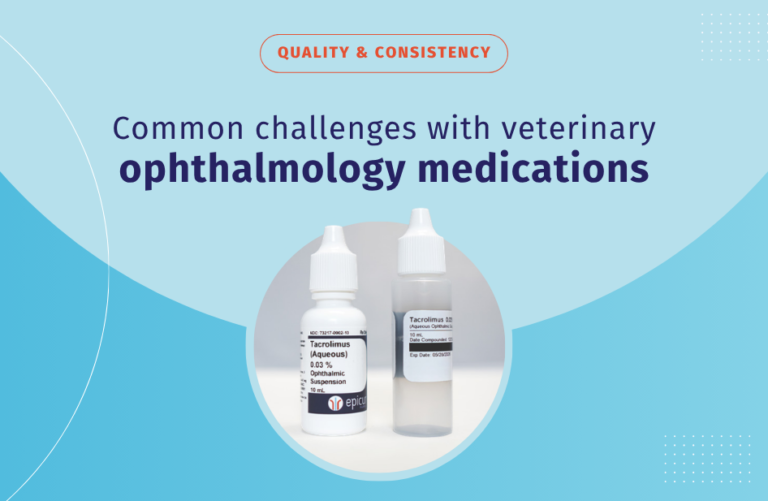
Many ophthalmic medications, including tacrolimus eye drops, are highly sensitive to light exposure. Improper packaging can lead to:
- Drug degradation
- Reduced potency
- Shortened shelf life
- Less predictable dosing
If the appropriate packaging is not used in the manufacturing process, the quality of the product is at risk before it even reaches the patient.
Packaging Matters!
What should veterinarians look for in an ophthalmic medication provider?
- The formulation will remain consistent over time
- The beyond-use dating reflects real stability data
- The medication will perform reliably across patients
- The manufacturer is transparent and accountable
Your provider should be able to confirm the quality of their products and reinforce your trust in them. Key indicators of quality include proven safety standards, batch-to-batch consistency, verified potency and label accuracy, reliable inventory and dating, transparency and support. 503A pharmacies are not required to conduct final product testing. They also have shorter USP limited-beyond-use dates compared to stability-indicating beyond-use dates.
Compounded medications are not generics. Products from different facilities containing the same active ingredient often differ in formulation, testing, regulatory requirements, and dating. Variations between 503A and 503B facilities and among individual compounding pharmacies can negatively impact quality, consistency, and the animal’s overall health.
How Epicur sets a higher standard for ophthalmic medications.
- Greater batch consistency
- Validated stability and longer, proven expiration dates of up to 365 days
- Reduced variability compared to traditional compounding
Additionally, Epicur prioritizes packaging decisions that support drug integrity, including opaque containers for light-sensitive ophthalmic medications, with testing performed both before and after packaging to verify stability and purity.