



Expert Veterinary Insights on ESGD, EGGD, and Modern Treatment Approaches
Dr. Camilla Jamieson always knew she wanted to be a horse vet. Growing up around horses, she started learning about equine medicine as a kid and her passion for a career in the field was reinforced when a few equine veterinarians took her under their wing. Today, she is an internationally trained equine internal medicine specialist and trusted leader in the field, gaining expertise from her work in demanding equine medical environments all across the globe.
We’ve been lucky enough to partner with her for several educational webinars, and now we’ve sat down with her to talk one-on-one about the intricacies of Equine Gastric Ulcer Syndrome (EGUS) and why effective diagnosis and management require more than a one-size-fits-all approach.
What are some of the biggest misconceptions about Equine Gastric Ulcer Syndrome you see among horse owners and veterinary professionals?
One of the biggest misconceptions is that we can diagnose and treat equine gastric ulcers based on clinical signs alone. Many horses are treated for ulcers because of behavioral changes or performance issues, but those signs can be caused by a wide range of conditions. Without a gastroscopic examination, it can be difficult to determine whether ulcers are truly the underlying problem.
Another challenge is that all gastric ulcers are often treated as though they’re the same disease. They’re not. The stomach has two distinct regions, and ulcers in those areas can behave very differently. The glandular and squamous portions of the stomach often require different treatment protocols, treatment durations, and management strategies. When treatment is selected without identifying the type and location of the ulcer, there’s a risk of using the wrong therapy or not treating long enough to achieve meaningful healing.
I also encourage veterinarians and owners to think about equine gastric disease as a long-term management condition. In many horses, especially performance horses, it’s not a matter of treating once and never dealing with it again. Managing the underlying risk factors is often just as important as treating the active disease.
How has vets’ understanding of EGUS changed since you started in the field, and how has that impacted diagnosis and treatment?
Fifteen years ago, most discussions around EGUS centered on acid suppression and oral omeprazole therapy. Today, our understanding is much broader. We know much more about how stress affects gastric health, how feeding practices influence acid production, and how horses’ natural grazing behavior impacts the stomach environment.
That expanded understanding has changed how we approach equine gastric disease management. We now recognize that diet, forage availability, stress reduction, turnout, and overall management are critical components of successful long-term care. At the same time, veterinarians have more therapeutic options available, including different proton pump inhibitors and treatment approaches tailored to individual cases.
While the fundamentals of diagnosis remain the same, access to gastroscopy has improved significantly. More practitioners have access to endoscopy equipment, making definitive diagnosis of Equine Gastric Ulcer Syndrome more accessible than ever before.

How do treatment approaches differ between Equine Squamous Gastric Disease (ESGD) and Equine Glandular Gastric Disease (EGGD)?
Understanding the difference between ESGD and EGGD directly impacts treatment selection, expected healing time, client communication, and long-term management.
For example, many squamous ulcers respond well to omeprazole and may improve within a few weeks. More severe glandular or pyloric lesions often require much longer treatment periods and significantly different expectations. In those cases, I prepare owners for the possibility of months of therapy rather than weeks.
A definitive diagnosis also helps build client confidence and compliance. When owners can see endoscopic images and understand exactly what is being treated, it becomes much easier to explain why a particular treatment plan is necessary, why healing takes time, and why follow-up evaluations may be required.
You’ve had experience working with extended-release injectable omeprazole before its introduction in the United States. What first drew your attention to this treatment approach?
I went to vet school in England, and the Bova product was already on the market then, so I was aware that it was available. I got hands-on experience with the injectable omeprazole and used it a lot when I worked in the Middle East for four years after my residency. Our medication supply was all Australian products, so we had the Bova products through our Australian supplier. I worked with large stud farms that managed large horse herds, and daily oral medication administration wasn’t always practical. Injectable therapy offered a convenient alternative because multiple horses could be treated on a weekly schedule rather than requiring daily dosing.
That convenience factor stood out immediately. Instead of coordinating daily administration, treatments could often be incorporated into routine veterinary visits. While management practices and owner preferences vary considerably from one region to another, injectable therapy provided a valuable option in situations where consistent oral administration was challenging.
Based on the research and clinical cases you’ve seen, what types of horses seem to benefit most from injectable omeprazole therapy?
I don’t think benefit is necessarily tied to breed or discipline. Instead, it’s often related to management and practicality. Some horses simply aren’t ideal candidates for daily oral medication because of feeding schedules, travel demands, owner availability, or difficulty maintaining fasting protocols.
Every case is different. Treatment decisions should be individualized based on the horse, the owner, and the management environment. One of the advantages veterinarians have today is a growing range of therapeutic options that can be matched to the specific needs of each patient.
Injectable Omeprazole for Horses
What does current research suggest about the role of injectable omeprazole in managing equine glandular gastric disease?
One area that continues to generate interest is how different formulations can help address some of the challenges associated with oral therapy. For example, one of the limitations of traditional oral omeprazole is that efficacy can be influenced by whether the horse has been fasted.
Researchers are actively exploring alternative formulations and treatment protocols to improve convenience, consistency, and outcomes. As the evidence base continues to grow, veterinarians are gaining more tools to tailor equine gastric ulcer treatment and prevention strategies to individual horses.
Once ulcers have healed, what management strategies do you recommend to reduce the risk of recurrence?
My ideal goal is to achieve complete healing through medical therapy and then maintain horses through management changes whenever possible. Some horses will require additional medical support because of their lifestyle or predisposition, but management remains a critical part of long-term success.
The biggest recurring risk factors I see are stress, illness, diet changes, travel, reduced turnout, and disruptions to a horse’s normal routine. Those factors often occur together, particularly in performance horses. Recognizing periods of increased risk allows veterinarians and owners to proactively adjust management and treatment strategies when appropriate.
What areas of future equine gastric disease research are you most excited about?
The biggest area of research that I’m really excited about right now is looking at the way esomeprazole paste and the enteric coating is formulated. One of the biggest problems we face with oral omeprazole is that it’s a great drug if it’s fed on an empty stomach, but it’s a really variable and weak drug if the horse’s stomach is full of food. But one of the biggest predictors of creating gastric ulcers is holding horses off feed. It creates a difficult catch-22: you have to fast the horse for the drug to work, but fasting the horse is bad for the disease.
We’re hoping to evaluate how the enteric-coated esomeprazole formulation performs in fasted versus non-fasted horses. Based on early data, it looks like it makes no difference whether it’s fed on an empty stomach or a full stomach. If that holds true, that would be a huge convenience benefit for owners not having to try to add a two-hour fast into their horse’s day, but it would also have major benefits for treating the disease.
Beyond this research, there are groups that are looking at various treatment protocols, duration of protocols, and use of smaller doses for prevention and management with the injectable omeprazole. Through all of this research and the more we know, the better we are going to be able to tailor individual treatment courses for individual animals.
If you could leave equine veterinarians with one practical takeaway about diagnosing and managing EGUS more effectively, what would it be?
Prepare owners for the long haul. One of the most common conversations I have is explaining why a horse isn’t fully healed yet or why additional diagnostics and treatment are still necessary. Setting expectations early helps improve compliance and trust.
And whenever possible, pursue an accurate diagnosis through gastroscopy. The more precisely you can characterize the ulcers you’re treating, the better you can tailor therapy, improve outcomes, and make informed recommendations for long-term management.
Thank you, Dr. Jamieson, for sharing your expertise and helping shed light on the complexities of equine gastric disease!
Product Brochure
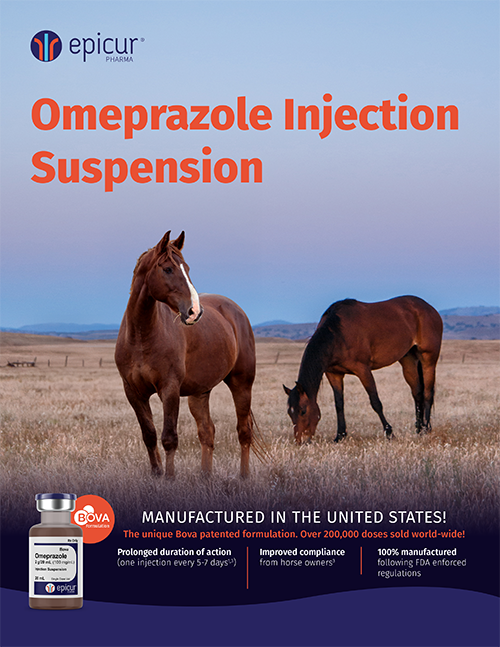
Discover how our injectable omeprazole suspension is helping veterinarians streamline equine gastric ulcer treatment.
Download a copy of our brochure for yourself or to share in your practice.
Upcoming Webinar

Injectable Omeprazole in Equine Gastric Disease: An Expert Panel Q&A
On-Demand Webinar

Long-Term Management of EGUS in Performance Horses